
Wolverines and the Endangered Species Act

Wickersham's Conscience's avatarWickersham's Conscience

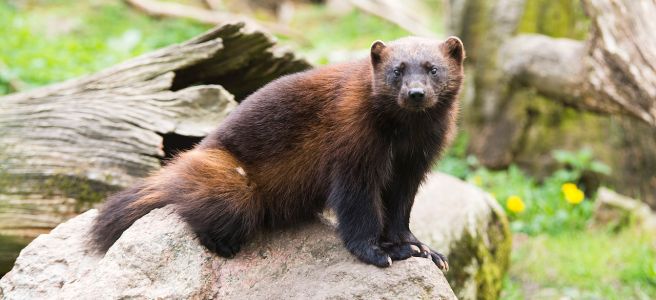
Wolverine in Sweden, 2013 (Photo Jonathan Othén, used under Creative Commons License)

WC has only seen three wolverines the wild. And none of them resulted in a photo.

WC saw the first on the third day of a torrential rainstorm, washed out of an attempt to climb Scott Peak, hiking out down Sunset Creek in Denali National Park. That wolverine was loping steadily upstream – the gait is unmistakable – on the other side of the flood-swollen creek in the hard rain, not looking any happier drenched than we did.

The second was on a canoe trip down the Delta River. Another canoe had capsized, and we were on the west bank, drying stuff out and warming the cold, wet folks up, when a wolverine came down a cut bank maybe 50 meters downstream on the other side of the river. The animal calmly drank a little water, sniffed the…

View original post 851 more words

Photography in Winter in Alaska

I’ll refer my professional photographer friend.

Wickersham's Conscience's avatarWickersham's Conscience

Interior Alaska during summer enjoys long hours of daylight, much of it low, “sweet” light. It’s a nature photographer’s dream. Sure, there are mosquitoes, and sometimes days of rain, but generally, conditions are ideal. Especially the light. Sunrise and sunset last for hours.

Winter is another story. It’s long – six months or more. It’s dark – as little as 3.5 hours of feeble, nearly useless light. And it’s cold. A “warm” day is when it’s above zero, even insingle digits. But it’s the absence of usable light that frustrates a nature photographer the most.

And the next three months are the worst. Even at 1:30 PM, this little fellow:

Boreal Owl

required full flash, high speed and full aperture. Because lenses are made of different kinds of materials – glass, metal plastic – they contract at different rates when they get cold. Which makes them lock up. And batteries, even lithium…

View original post 94 more words

Am I Wasting My Time? – A Genealogy Quest

I am currently filling in my Ancestry Tree. I am trying to find more information about Keziah “Callie” Ann Wesley who lived from 1823-1899. She was the Great Grandmother of the Wife of my Paternal 1st Cousin. Is this a wild goose chase? No I don’t think so. This is what genealogy is all about – establishing remote connections in time and space and in a 4th dimension. That’s what makes it interesting – and compelling.

My father’s father (my paternal grandfather) grew up in Ohio. His first wife died young, leaving 2 young children. It is these 2 children, born in the 1860’s, that lead me a merry chase. I have tended to ignore them in growing my family tree but of late I am turning my attention to them. Most of the people in my family tree were New Englanders, but this branch went West, particularly to Colorado.

So what of Keziah or Callie Ann West? Keziah was one of the Great Grandmothers of Maud Parr. Maud Parr was the wife of Charles Dion Miller. Charles Dion Miller was the first born son of my Grandfather, Charles Dana Miller. Charles Dion was born in 1867, in Newark Ohio. Charles Dion married Maud Parr in 1892, in Chicago. Maud’s Great Grandmother was Keziah or Callie Ann West.

The 4 children of Joseph Buckingham Miller
More descendants of Charles Dana Miller (Our young family, St. Lucia, 1972)

Return of Bird of the Week: Black-billed Nightingale-Thrush

Superb post (for bird lovers)

Wickersham's Conscience's avatarWickersham's Conscience

Black-billed Nightingale-Thrush, Costa Rica

A close cousin to last week’s Black-headed Nightingale-Thrush, this is another of the eight Catharus Nightingale-Thrushes. The species has the smallest range of that genus, extending across the highlands of central Costa Rica and into the mountains of western Panama. Within that range it is confined to the higher slopes, from about 1,800 meters up to the tree line.

It forages mostly on the ground, but occasionally on lower epiphytes in the forests. Its foraging behavior is much like the American Robin’s, probing the ground, scratching, occasionally tossing leaves and moving by hopping from place to place. It feeds mostly on insects, but occasionally on fruit.

Black-billed Nightingale-Thrush, Panama

The systematics of the species are unsettled, with the authorities arguing there are between two and four subspecies. The populations tend to be isolated from each other by the higher slopes of the two mountain ranges…

View original post 95 more words

Field Notes: Texas Flycatchers

Wonderful information on birds!

Wickersham's Conscience's avatarWickersham's Conscience

This post is for WC’s friend, Nils Warnock, a consummate birder. He has forgotten more about birds and birding than WC will ever learn. He has carte blanc to correct all of WC’s errors.

To misquote Calvin and Hobbs, there are about a bazillion flycatchers. Among the Tyrannidae, the New World’s Tyrant Flycatchers alone, there are 425 species spread across 101 genera. Many of them, especially the 15 members of the genus Empidonax, look pretty much the same, and some can only be distinguished by subtle behavioral cues or vocalizations. If at all. So this blog post, which WC thinks features three different Empids, offers uncertain identifications. So it goes.

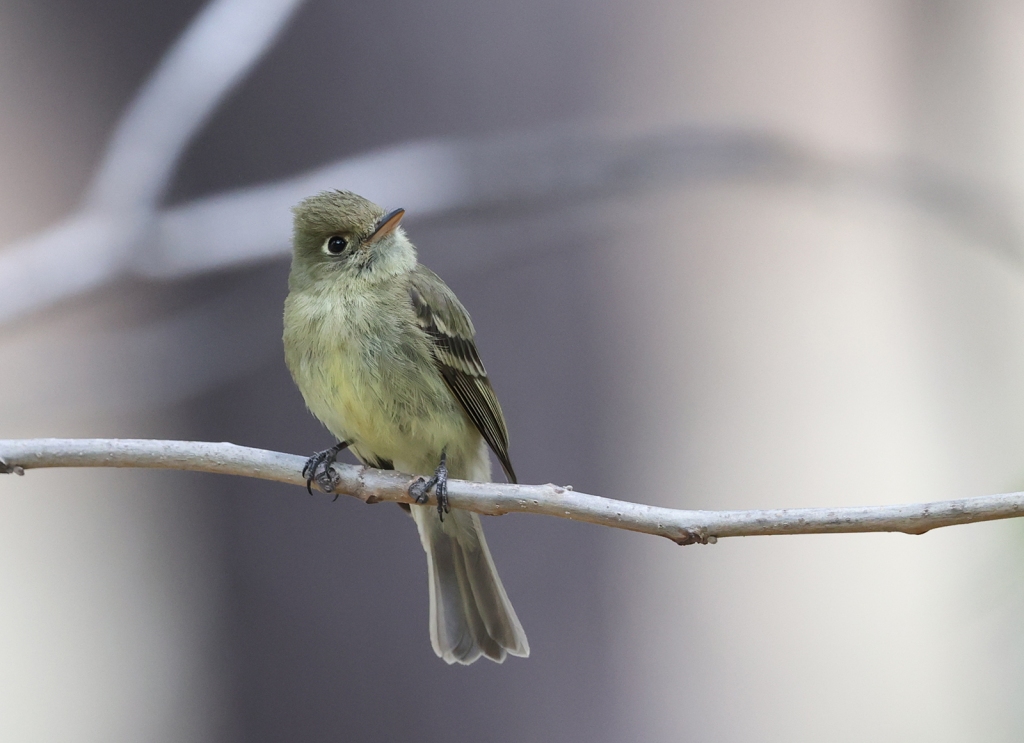
Probable Cordilleran Flycatcher, Cave Creek Canyon, Arizona

We’ll start with one of the “easier” Empids. The Cordilleran Flycatcher used to be the Western Flycatcher, but that species was split into the Cordilleran and Pacific Slope Flycatchers a…

View original post 541 more words

Books Read – May 2022

Three Sisters Three Queens by Philippa Gregory

Breakfast with the Nikolides by Rumor Godden

The Elephant Vanishes by Haruki Murakami

Birds, Beasts, and Relatives by Gerald Durrell

East of Eden by John Steinbeck

The Alice Network by Kate Quinn

Chiara by Allen E. Rizzi

Black Narcissus by Rumor Godden

Cragside, A 1930s Murder Mystery by MJ Porter

The Lewis Man by Peter May