

Will Spring Ever Come?


… there is an old Marine poem… it says: ‘When I get to heaven, To St. Peter I will tell, Another Marine reporting sir, I’ve served my time in hell.” ______ Eugene Sledge, USMC veteran of Peleliu & Okinawa
I watched the flag pass by one day.
It fluttered in the breeze
A young Marine saluted it, and then
He stood at ease.
I looked at him in uniform
So young, so tall, so proud
With hair cut square and eyes alert
He’d stand out in any crowd.
I thought, how many men like him
Had fallen through the years?
How many died on foreign soil?
How many mothers’ tears?
How many Pilots’ planes shot down?
How…
View original post 429 more words
I’m now switching from my laptop to my desktop, which I haven’t used in about 9 months. It is like having a new toy. The switch has occurred because we moved the furniture a bit. We had the desktop facing the wall and my back to the living room and the window. A grim corner. So this is a new arrangement of the furniture. Hooray.
An obscure book but I am sure of interest to some.
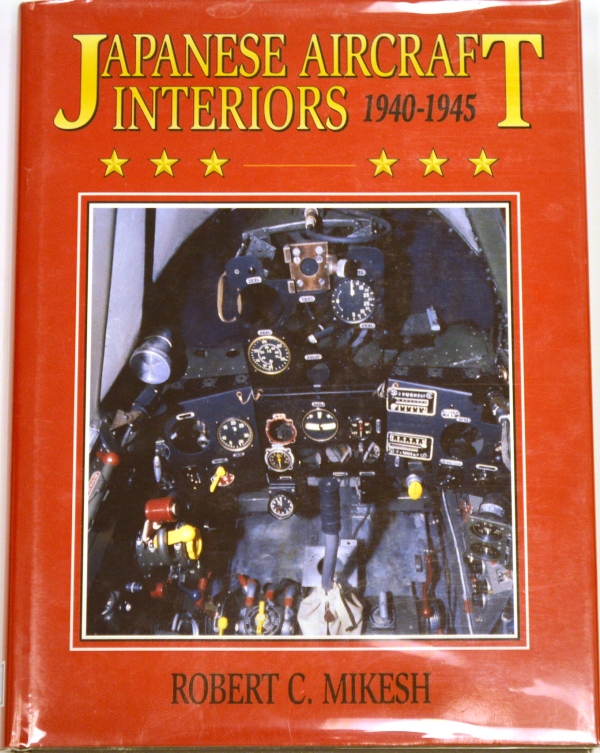
Japanese Aircraft Interiors 1940-1945
By Robert C. Mikesh
Hardcover in dustjacket, 328 pages, profusely illustrated
Published by Monogram Aviation Publications April 2000
Language: English
ISBN-10: 0914144618
ISBN-13: 978-0914144618
Dimensions: 12.5 x 9.2 x 1 inches
Robert C. Mikesh is a name known to all aviation enthusiasts. A former USAF Officer, he was the Senior Curator for Aeronautics with the U.S. National Air and Space Museum. Fortunately for modelers and others interested in aviation history, he used his unparalleled access to surviving examples of Japanese aircraft to document them from a unique perspective – the cockpit interiors and crew positions.
This book is exceptional for its presentation and its thoroughness. Included are examples of nearly all aircraft types operated by the Imperial Japanese Navy and Air Forces during the Second World War. Each type receives a brief introduction, and then the reader is treated to several photographs and illustrations documenting the interiors and equipment. The photographs…
View original post 252 more words
For a feeling of one family’s life during World War 2.

This week I will be posting letters written in July of 1944. Lad and Marian are awaiting Lad’s move to an Embarkation Camp and Marian’s drive to Trumbull. Dan is in London following the hustle before D-Day and Ced is still in Anchorage, working at the airfield and gaining flying time towards his Pilot’s license. Dick is in Fortaliza, Brazil coordinating things between the Army and the local workers and Dave continues at Camp Crowder, receiving more specialized training.
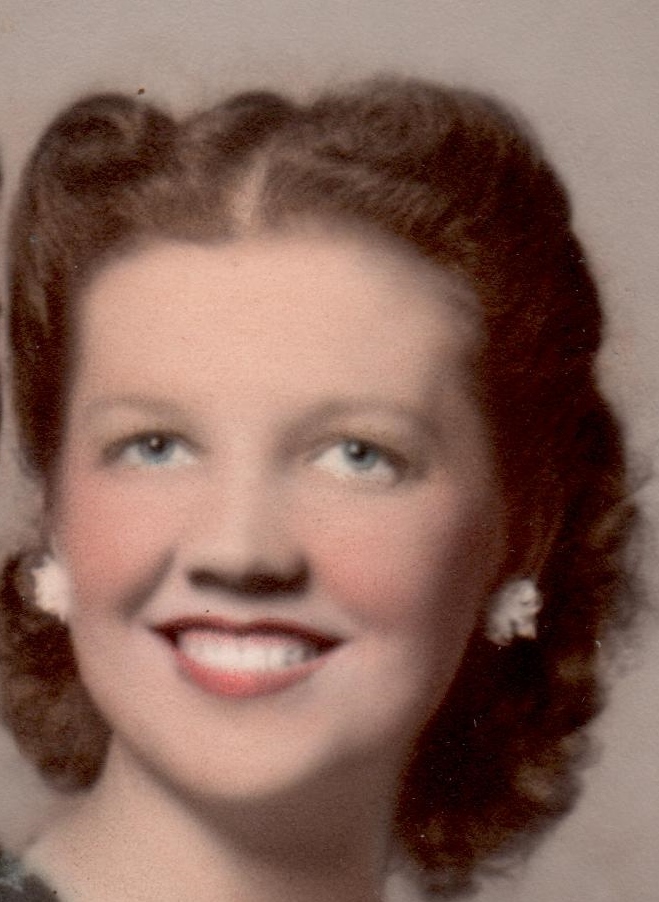
Marian (Irwin) Guion

Monday
Pomona July 17 ‘44
Dear Dad –
Things are still pretty much “on ice” as far as we are concerned. If the Army knows when we are going to move they are keeping it a deep dark secret. But knowing the Army, we are mighty suspicious.
We have been trying to tie up all the loose ends so that we can move on a moment’s…
View original post 202 more words
Raise your hand if you remember the Enniskerry Pottery. As one traveled south from Dublin out through Dundrum to Enniskerry and drove or cycled (or walked) down the final hill, this little shop/craft studio was located on the left hand side of the road just outside Enniskerry Village. (Just before the left turn to go to Bray). Enniskerry Pottery, run by 2 young women, Month Parkes and her friend, whose name I can’t remember. A cosy little studio/shop. Eventually it closed, remained abandoned, and was torn down. Sadly, Monah was an early victim of cancer.
Years ago I lived in St. Lucia in the West Indies. It was idyllic for our young family with 3 little boys. I took up sewing and also embroidery. I had a pattern on canvas and created a large picture using different embroidery stitches. I spent many an hour with my neighbor and good friend Mary Moore chatting away and working on my stitches while our young children played. It was a steep learning curve. Anyhow I eventually finished this large piece, which was a rather charming picture a girl on a swing. I had it framed. What to do with it?? In due course we returned to Dublin and I tried to sell it. I had it for sale in the Enniskerry Pottery – date 1974/75.
We weren’t back in Dublin for very long. A few months after our return from St. Lucia, we went to Fiji, really on the other side of the world. And that was the last I heard of the Enniskerry Pottery and my lovely wallhanging, the girl on a swing, outlined by embroidery stitches. I didn’t even have a photograph of the embroidery or the Enniskerry Pottery.
I actually do have the embroidery book I purchased in St. Lucia – it is sitting on my shelf right here at Ida Culver Broadview. That book is full of memories!
John Jaroh Miller, my 17th Great Grandfather. He was born in 1330 in Bavaria Germany and he died in 1440 in Germany. This checks out with my ethnicity estimates. Germanic Europe accounts for 7% of my ethnicity.
 Courtroom spectators, Manila
The Allies also established the United Nations War Crimes Commission (the UNWCC) in 1943. The UNWCC collected evidence on Axis war crimes and drew up lists of suspected war criminals for Allied prosecution after the war. In 1944, a sub-commission of the UNWCC was established in Chungking to focus on the investigation of Japanese atrocities.
The major trials being held in Tokyo were presided by the U.S., Britain, Australia, the Netherlands, France, China and the Philippines and began in May 1946. General MacArthur, as supreme commander of the Allied powers, largely controlled the progress of the trials. They started with 25 defendants, but two passed away during the proceedings and another was evaluated as too mentally deficient to participate.
 Hideki Tojo listening to testimonies.
Hideki Tojo was the most infamous face to symbolize Japanese aggression being that he was the Prime Minister at the time of Pearl…
View original post 524 more words
I came across the materials & chart packs for these cute little gingerbread mice figures from Just Nan recently – Santa mouse, Jingle mouse and Angel mouse. They are so sweet, and very unusual!
I thought they’d look good with the Victoria Sampler buildings that I have previously stitched, and which I display under my tree at Christmas.
I bought the charts from Create Nostalgia, an online shop in Flintshire, for £12.95 for each chart, which included the accessories needed, but no fabric or threads. I chose some fabric from Peakside Needleworks.co.uk of Glossop – a small piece of 32 count Weeks Dye Works “Straw” colour fabric 1/16 size of a metre, 9 inch x 13.5 inch, which cost £5, and was enough to make all three mice (they are very small!). The threads I picked from my stash – only small amounts were needed of each colour, so…
View original post 90 more words
We think we live in terrible times what with Covid etc but actually World War II and its aftermath were not easy by any means.
 Yamashita at his trial.
One of the most monumental surrenders in the Pacific War was General Tomoyuki Yamashita.
General Tomoyuki Yamashita as he led his staff officers of the 14th Area Army to surrender, 2 Sept. 1945. He did not believe in hara-kiri. He said, “If I kill myself, someone else will have to take the blame.”
Just as the Japanese surrenders occurred in different places and on different dates, so were the trials. The regulations used differed and the criminal charges varied. Preparations for the war crimes started early in mid-1942 due to the heinous reports coming out of China during the Japanese invasion in 1937. The home front recollections of these proceedings might differ from the facts stated here because of the media slant at the time and sensationalism.
 Trial correspondents
Often, the stories were even inaccurate, such as in Time magazine, the writer ranted about Yamashita’s brutality…
View original post 641 more words
A blog about Greece, art, and life in general
Possibly the Only WordPress Blog Hosted by Mice
Explore . Imagine . Create
Romance
Authentic Nautical Accessories, and Custom Furnishings
A Boutique Blog for Lovers of Hidden Beauty
My manuscript A Greek Matinée, genre that "sweet spot" between Literary and Commercial/Book Club Fiction with fit to Unstable Minds; progress and curious things; Writing, Greek Gods, Books, Recipes, Bits & Bobs
- life - bokdrols of wisdom -
birding and bird photography
Retired, not expired: words from the after(work)life. And music. Lots of music!


 Janet's Thread 2