
Something to Rail About

So interesting.

Wickersham's Conscience's avatarWickersham's Conscience

Certainly the most difficult North American family of birds to see, let alone photograph, are the Rails. While there are some 139 species of Ralidae worldwide, WC in this post focuses on the six “true” North American Rails.1 WC has photos of five of them – for a given definition of “photo” – and is highly unlikely (to the point of near certainty) to ever see let alone photograph the sixth. But that’s getting ahead of the tale.
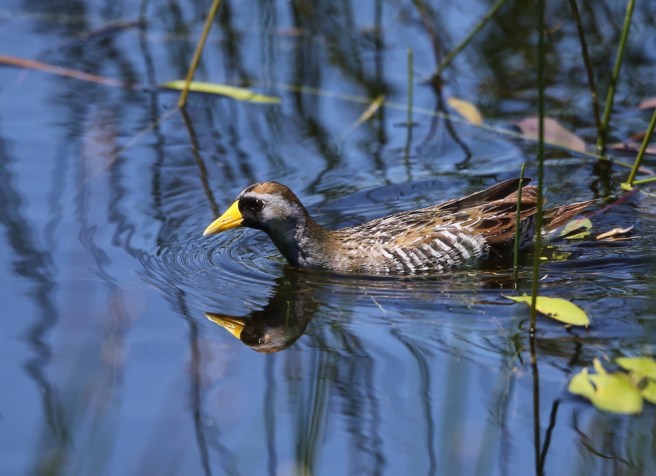
Sora swimming, Centennial Marsh, Idaho

By far the least difficult – WC wouldn’t say “easy” – Rail to photograph is the Sora. Unlike other Rails, it occasionally actually comes out into the open, especially when foraging to feed its young. The big, bright yellow bill and black chin and neck make the species unmistakeable in the field. It’s very widely distributed, found all across the continent and even in parts of…

View original post 571 more words
Return of Bird of the Week: Great Thrush

All about birds.

Wickersham's Conscience's avatarWickersham's Conscience

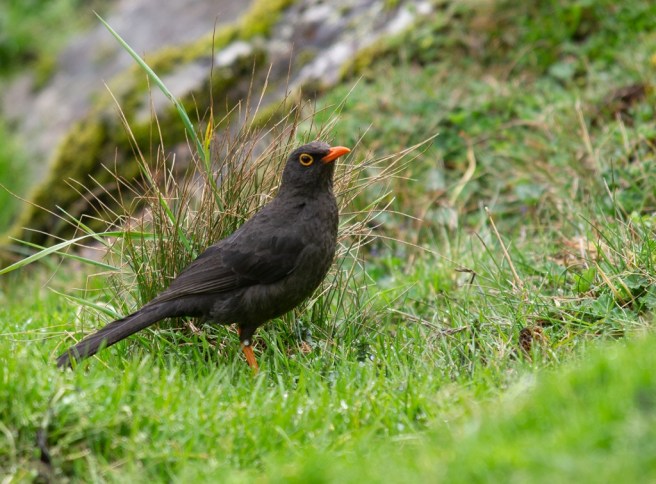
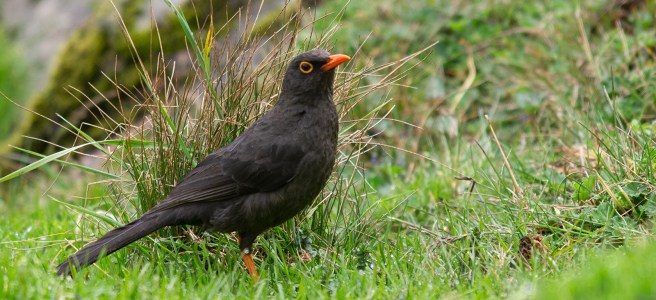
WC has exhausted his collection of even marginally presentable photos of Trogons, so we will move on to another family of birds, the Thrushes, the taxonomic family Turdidae. There are some 174 species of Thrushes spread across 18 genera. Some will be immediately familiar. Some will surprise you. WC has photographed only a small fraction of this large, widespread family of birds. But we will start with the largest member of that family, the Great Thrush. Spoiler alert: it’s good, but not really great.

Great Thrush Male, Ecuador

The Great Thrush can weigh as much as 175 grams; for comparison, a big American Robin might weigh 77 grams. Some subspecies run to 33 centimeters in length; the America Robin is about 25 centimeters. The dark gray body, orange bill and legs are pretty distinctive; in the males, the orange eye ring is definitive.

This is a montane species, rarely…

View original post 241 more words

Big Books

While waiting at the doctor’s today, I was reading a short story by Haruki Murakami. It was about reading and doing without sleep. The gist of the story was about the value of reading BIG books. This set me to thinking how I wanted to read a BIG book. So after the minor “surgery” at the doctor’s, I rewarded myself in my usual way with a trip to nearby Barnes & Noble and a search for a BIG book. What about Paul Scott’s The Raj Quartet? Not in stock. J.G. Farrell’s books – not in stock. So I wandered in the “stacks” and bingo – there was Margaret Mitchell’s Gone With the Wind. I wasn’t really looking for that one but it certainly was BIG. Phew. About 1000 pages and HEAVY. About the Civil War and the South. Not really what I wanted but it has been more than 60 years since I read it. My sister Nan and I both loved it! So that’s my choice.

The Alvord “Desert”

Back to my days of studying geology.

Wickersham's Conscience's avatarWickersham's Conscience

Alvord Desert, looking northwest at the summit of Steens Mountain

It’s not a desert, although the area only gets about seven inches of precipitation a year, on average. It’s a playa, the dry bed of a former lake, and it’s about 8 miles wide and 70 miles long. The surface of the dry lake bottom is absolutely, unnervingly flat, and bare of any visible trace of life. WC was there last just week.

The playa surface is at an elevation of about 4,060 feet. It’s high desert. The block fault face of Steens Mountain towers over the playa, rising more than a mile overhead. Steens Mountain was intermittently glaciated in the late Pleistocene and Pliocene, from 3.5 million years to 15,000 years ago. No ordinary lake can survive for 3.5 million years; they fill up with sediment. But the Alvord Playa is part of a graben, a fault-bounded block of…

View original post 501 more words

New/Old Relatives

As a young man, my paternal grandfather Charles Dana Miller, fought in the Civil War, North vs South. Serving in an Ohio Regiment, my grandfather was on the Union side. He survived the War and shortly afterward, in 1865, he married and had 2 children. Sadly his young wife died following the birth of the 2nd child. As I understand it, his parents helped in looking after the grandchildren. Years passed and eventually he sought additional help with the children, and this is where Mary Murdock, a young girl living in Crown Point New York, was asked to come out to Ohio to be a housekeeper for Charles. (I suspect that she and her family were known to Charles and maybe even related.)

Well, the marriage took place in November 1882 in Crown Point New York between Charles Dana Miller and Mary Murdock. They are my grandparents. My father was born to them in 1891.

But what of the daughter and son born to my grandfather Charles Dana Miller and his first wife Lucy Gilman Jewett. The daughter remained in the Newark area. She married and had several children. To date I have not identified that line of step relations.

No it is the infant son, Charles Dion Miller, born 1867, whose path I have traced. When he grew up he married a woman named Maud Parr. That family had a farm in Iowa. The descendants in turn gravitated to Colorado.

..to be continued