
I Heard The Bells…….

A poem by Henry Wadsworth Longfellow. Written in 1863 at a time of personal and national despair.

I heard the bells on Christmas Day

Their old, familiar carols play,

And wild and sweet

The words repeat

Of peace on earth, good-will to men!

And thought how, as the day had come,

The belfries of a all Christendom

Had rolled along

The unbroken song

Of peace on earth, good-will to men!

Till ringing, singing on its way,

The world revolved from night to day,

A voice, a chime,

A chant sublime

Of peace on earth, good-will to men!

Then from each black, accursed mouth

The cannon thundered in the South,

And with the sound

The carols drowned

Of peace on earth, good-will to men

It was as if an earthquake rent

The hearth-stones of a continent,

And made forlorn

The households born

Of peace on earth, good-will to men

And in despair I bowed my head

“There is no peace on earth,” I said;

“For hate is strong,

And mocks the song

Of peace on earth, good-will to men!”

Then pealed the bells more loud and deep:

“God is not dead, nor doth He sleep;

The Wrong shall fail, The Right prevail,

With peace on earth, good-will to men.”
Searching for a Theme

Should I post a favorite poem? A poem that keeps coming to mind is Robert Frost’s “Mending Wall”

“Something there is that doesn’t love a wall,

That sends the frozen-ground-swell under it,

And spills the upper boulders in the sun;

And makes gaps even two can pass abreast.

The work of hunters is another thing:

I have come after them and made repair

Where they have left not one stone on a stone,

But they would have the rabbit out of hiding,

To please the yelping dogs. The gaps I mean,

No one has seen them made or heard them made,

But at spring mending-time we find them there.

I let my neighbor know beyond the hill;

And on a day we meet to walk the line

And set the wall between us once again.

We keep the wall between us as we go.

To each the boulders that have fallen to each.

And some are loaves and some so nearly balls

We have to use a spell to make them balance:

‘Stay where you are until our backs are turned!’

We wear our fingers rough with handling them.

Oh, just another kind of out-door game,

One on a side. It comes to little more:

There where it is we do not need the wall:

He is all pine and I m apple orchard.

My apple trees will never get across

And eat the cones under his pines, I tell him.

He only says, ‘Good fences make good neighbors.’

Spring is the mischief in me, and I wonder

If I could put a notion in his head:

‘Why do we make good neighbors? Isn’t it

Where there are cows? But here there are no cows.

Before I built wall I’d ask to know

What I was walling in or walling out,

And to whom I was like to give offense.

Something there is that doesn’t love wall,

That wants it down. I could say ‘Elves’ to him,

But it’s not elves exactly, and I’d rather

He said it for himself. I see him there

Bringing a stone grasped firmly by the top

In each hand, like an old-stone savage armed.

He moves in darkness as it seems to me,

Not of woods only and the shade of trees.

He will nt go behind his father’s saying,

And he likes having thought of it so well

He says again ‘Good fences make good neighbors.’

L’amitié est un trésor

iamthesunking's avatarlouiscatorze.com

The beautician who does home visits tends to be mysteriously “fully booked” during the days surrounding Hallowe’en. She and Louis Catorze did make their peace** after that unfortunate incident* but I fear that, just to be on the safe side, she avoids him during Peak Psycho Time. And I can’t say that I really blame her; I would if I could.

*The incident: https://louiscatorze.com/2018/03/23/une-vision-de-la-beaute/

**The truce: https://louiscatorze.com/2018/04/12/la-maison-des-mille-cris/

Now that we are safely into November, she is free again and she came over the other day. We heard her talking at the front door long before she actually knocked, and we assumed she was on the phone but it turned out that she was chatting so Sa Maj who, at some point during the day, had escaped yet again. No, we have no idea of when nor how. But he followed her in, chirping and trilling, and then came upstairs to…

View original post 117 more words

Wool Dyeing: Copper Penny Blue

katknit's avatarDances with Wools

This dye substance is not a plant, but it would have been available in one form or other to many colonial home dyers. Known as “Copper Penny Blue”, this is a dye that does not need a separate mordant or even heat. The recipe is simple but it does take from 2-4 weeks for the process to complete itself. Fill a gallon jar to about three inches from the top with non-sudsing ammonia and put in: either 2 cups of pennies, OR a length of copper pipe OR a coil of copper wire. Screw the lid on tightly. Let this mixture sit for a week and watch it become a beautiful blue. At this point remove the copper , with rubber gloves, and put in the pre-wetted fleece to soak; varying the time gives different color effects. Some sources say it is also possible to do this with white vinegar…

View original post 128 more words

Mt. Moosalamoo Vermont

Does Mt Moosalamoo ring a bell with you? Did you attend Middlebury College? This mountain was the destination for our Freshman Hike. September 1954. The first of many in my 4 years at Middlebury. Hiking and climbing mountains was one of my many favorite activities.

Collecting postcards is now one of my favorite activities 60+ years later. And I just found a postcard of none other than Mt. Moosalamoo! Happy memories.

1951 Japanese Surrender

GP's avatarPacific Paratrooper

1951 Japanese surrender

A group of stranded survivors of a Japanese vessel sunk by the American military found their way to the island of Anatahan, 75 nautical miles north of Saipan.

The island’s coast line is precipitous with landing beaches on the northern and western shore and a small sandy beach on the southwest shore. Its steep slopes are furrowed by deep gorges covered by high grass.

This brooding cone jutting from the sea floor is a large, extinct volcano with two peaks and a grass covered flat field, the final resting place for a B-29 Superfortress that crashed upon returning from a bombing mission over Nagoya, Japan on January 3, 1945 killing the aircraft’s crew.

Anatahan/Mariana Islands

By 1951 the Japanese holdouts on the island refused to believe that the war was over and resisted every attempt by the Navy to remove them.

This group was first discovered in…

View original post 715 more words

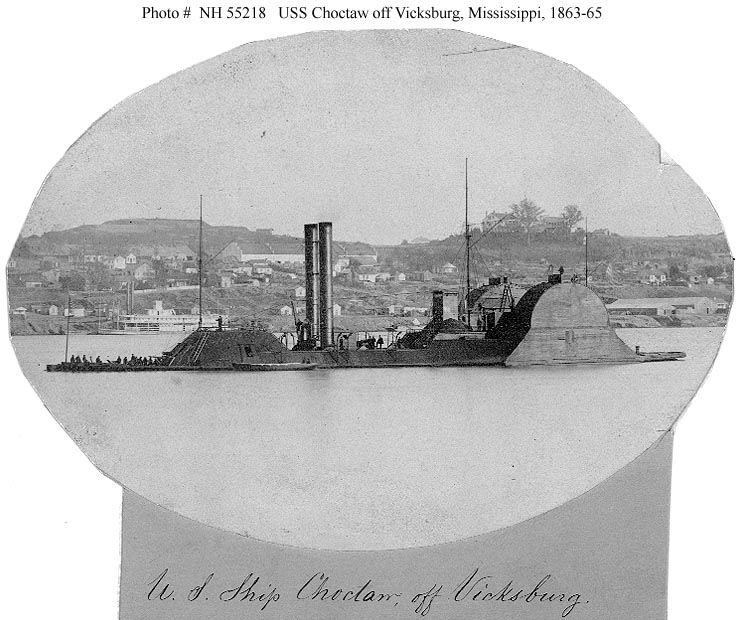
USS Choctaw, Civil War Ironclad Ram

Jeff Groves's avatarInch High Guy

Choctaw_01The USS Choctaw was built at New Albany, Indiana in 1856, originally as a merchant steamer for trade along the Mississippi River. She was purchased by the U.S. Army in 1862 and converted into an ironclad ram. In 1863 she entered service with the U.S. Navy for action against the Confederacy along the Mississippi and its tributaries. A very fine photograph given the era, note the crew’s laundry drying on the lines forward.

Choctaw_02The Choctaw was large for a river steamer, with a length of 260 feet (79 meters) and displacing 1,004 tons. Propulsion was via a steam engine which drove two side wheels. This gave her an unusual profile and a blistering maximum speed of two knots.

Choctaw_03Choctaw was given iron armor and a ram on her bow. She carried six guns – one 100 pound rifle, two 30 pound rifles, and three nine inch cannon. Some depictions show…

View original post 355 more words

Tigers in the Mud Book Review

Jeff Groves's avatarInch High Guy

DSC_7302

Tigers in the Mud, The Combat Career of German Panzer Commander Otto Carius

By Otto Carius, translated by Robert J. Edwards

Softcover, 231 pages plus documents, appendices, and index; illustrated

Published by Stackpole Books, 2003

Language: English

ISBN-10: 0-8117-2911-7

Dimensions:  8.9 x 6.0 x 1.1 inches

Otto Carius began his war as a loader on a Panzer 38(t) in the 21st Panzer Regiment at the start of operation Barbarossa, the German invasion of the Soviet Union.  Sadly only the first few chapters are devoted to his time with the 21st Panzer Regiment.  The narrative mainly focusses on events after January 1943, when Carius returned to Germany for officer’s training and eventual assignment to Schwere Panzer Abteilung 502, a Tiger unit.

There Carius was a platoon commander in the 2.Kompanie.  He was often right in the thick of the action, as the Tigers were used to bolster defensive positions…

View original post 265 more words

Oldest Western Knitting Images

katknit's avatarDances with Wools

Most representations of knitting in art have been produced from the 18th century on. The earliest ones are knitting Madonnas.  The Holy Family, by Ambrogio Lorenzetti, c. 1345, shows Mary knitting, but what she might be making is not clear.

3c8e17f881dba2917b93bcdbb016c9f6This is a detail from a polyptich by Tommaso da Modena, whose dates are 1325-1375). Mary is knitting something in the round using four needles. I believe this is in Bologna.

The next painting, by Meister Bertram von Minden, Germany, was done c. 1400-1410, in
the right wing of the Buxtehude Altarpiece.  Titled “The Madonna Knitting Christ’s Seamless Garment”,  it represents the Virgin Mary making a tunic in the round, using 4 needles. The tradition of the seamless garment describes a scene at the crucifixion, when the Roman soldiers cast lots to win possession of it, not wishing to tear up such a valuable item of clothing. Two churches, the cathedral at…

View original post 113 more words

Looking Again At Favorite Books

I used to have a complete collection of books by Derek Tangye, one of my favorite authors way back when. Light hearted and just plain fun – and a great love of cats. A breath of fresh air on a daffodil farm in Cornwall England. I finally parted with my Derek Tangye book collection in order to make room for more recent favorites. But today I weakened and reordered a Tangye favorite – yes they do still exist and I look forward to rereading Lama. I look forward to this easy cat oriented read. This will be a “comfort” read.